

You've probably heard the term neuro-affirming or neurodiversity-affirming used more frequently over the past few years. But what does it actually mean? More importantly, how do you instill the principles in your own work?
Neuro-affirming practice is about recognising, understanding and accepting different ways of thinking, learning, communicating and experiencing the world. It's about moving away from trying to change people to fit into environments that weren't designed for them, and instead creating environments that accommodate different needs and abilities.
For parents, teachers and health professionals, this requires a shift in perspective. It changes how we understand behaviour, set goals, deliver interventions and support children to participate in everyday life. Let's break down what neuro-affirming practice means and how we can put it into action.
Moving beyond the medical model
Traditionally, disability has often been understood through a biomedical model. This approach focuses on identifying individual impairments, diagnosing them and attempting to treat, correct or minimise the impairments. In this model, the “problem” is the person with disability.
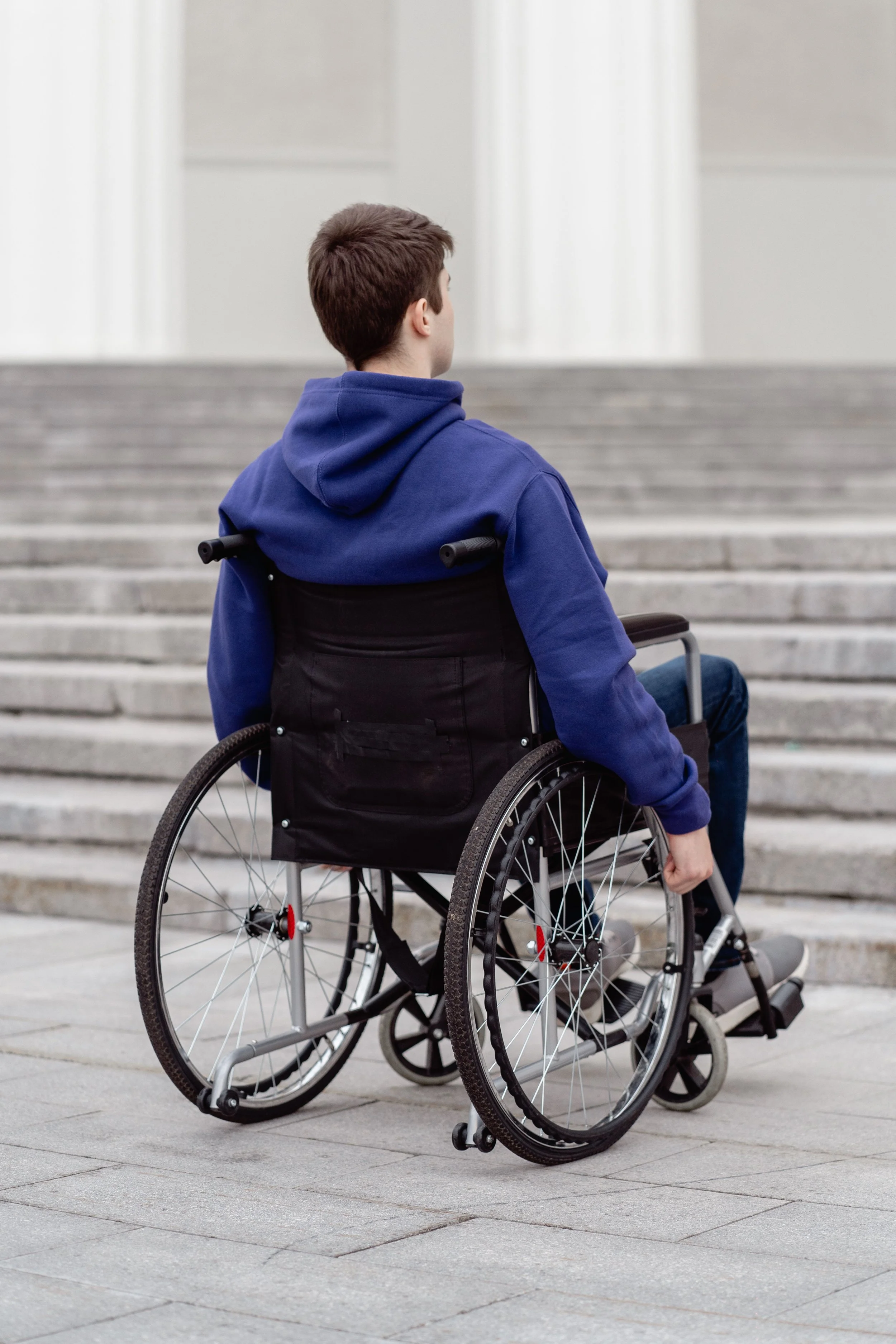
Biomedical Model of Disability
“If only I could walk up the stairs…”
This way of looking at disability puts the burden of the problem on the person with disability, and often on characteristics about themselves or their disability that they cannot change! When applied to autism, this can create a strong focus on the things an autistic person finds difficult and the behaviours or characteristics that make them different from their neurotypical peers. It therefore suggests that becoming “less autistic” is the way to overcome challenges that neurodivergent people face in social and community situations. For example, if we say that autistic people are “always overstimulated at sporting matches”, rather than “sporting matches are overstimulating and we have made no accommodations to make them accessible”.
The Social Model of Disability
But there's another way to look at disability.
The social model of disability recognises that disability isn't simply an inevitable consequence of an individual's impairment. Instead, the attitudes, environments, expectations and systems around us can create significant barriers to participation. This means that the “problem” is not the person with a disability but the disabling world that a lack of acceptance and accommodation creates for them.
Think about a child who finds a busy swimming pool overwhelming. A traditional approach might focus on changing the child's behaviour so they can tolerate the environment, such as 1:1 lessons with a specialist instructor, avoiding other children, and behaviour plans for if things go wrong.
A social model approach asks a different question:
What is it about the environment that's making participation difficult, and what can we change to make it more accessible?
Could we attend at a quieter time? Provide an opportunity to explore the pool before participating? Use visual information to explain what will happen? Allow additional time to become familiar with the environment? The focus shifts from fixing the individual to identifying and addressing the barriers around them. The Social Model of Disability was developed by disabled people over 40 years and represents not just evidence-based practice but also consumer-led ideals for the way that people with disabilities should be included.
This is a fundamental part of neuro-affirming practice.

Social Model of Disability
“We can make the building accessible for everyone”
So, what is neuro-affirming practice?
Neuro-affirming practice is about understanding and accepting neurological differences and recognising that there isn't one correct way to think, learn, communicate or experience the world. It acknowledges that autistic and other neurodivergent people experience the world differently, and that these differences should be respected and not just seen as deficits.
This doesn't mean ignoring the challenges someone experiences or assuming that everyone has the same needs - we don’t!
Autistic children may require significant support with communication, sensory processing, emotional regulation, motor skills and everyday activities. Neuro-affirming practice recognises these support needs while ensuring that the individual is respected, their strengths are recognised and their goals remain central to the support they receive.
Five important principles of neuro-affirming practice
There isn't a single checklist that makes someone neuro-affirming. It's an approach that should influence how we think, communicate, teach and interact with others.
However, there are several important principles that help guide this practice. These principles are provided by the Australian Government as a framework for supporting children and young people in a neuro-affirming way:
1. Be strengths-based
It's easy to become focused on what a child finds difficult. We might identify challenges with communication, coordination, attention, social interaction or emotional regulation. While understanding these areas is important, they shouldn't be the only things we focus on.
A strengths-based approach recognises and builds on an individual's abilities, interests and capabilities.
This means:
Assuming competence rather than making assumptions about what someone can or cannot do. You will be surprising at what someone can achieve when you give them a chance!
Identifying opportunities for success, and celebrating the wins.
Recognising individual strengths and interests, and that just because these are different to the norm, it doesn’t mean they aren’t valued.
Celebrating progress in ways that are meaningful to the individual. This is hugely important working with kids - no child went to sleep at night just wishing that they could “improve their fine and gross motor skills to keep up with their peers”.
Using passions and interests to support engagement and learning, because we know that neurodivergent people have narrow, deep interests that allow them to achieve mastery quicker than neurotypical kids. Rather than viewing their interest as something that distracts them from the activity, we can use it as a valuable tool to support participation.
2. Be person-centred
No two autistic people are the same, and their interests, preferences, communication styles, strengths and support needs will all be different.
A person-centred approach means putting the individual at the centre of our decisions.
Instead of starting with what we think someone should achieve, we should ask:
What is important to this person?
What do they enjoy?
What would they like to achieve?
How do they prefer to communicate?
What support do they need to participate?
This is particularly important when setting goals! For example, improving fundamental movement skills might be a useful clinical goal, but what does that actually mean for the child? Perhaps they want to ride a bike with their friends, participate in a favourite sport or make it to the other side of the monkey bars like Spider-Man. Connecting our professional goals with what matters to the individual makes our support more meaningful (and likely to work!).
3. Be trauma-informed
Our experiences influence how we interact with people, environments and activities. For many autistic people, previous experiences of being misunderstood, excluded, pressured or repeatedly unsuccessful can influence how they approach new situations. Due to a historically medical approach to disability, many autistic people (and their parents) were subjected to traumatic and harmful attitudes and therapies that shape their world today.
A trauma-informed approach recognises the potential impact of these experiences and aims to avoid further harm.
This involves:
Building trust through consistency and transparency. I always teach that you should show up as the same person every time, regardless of the day you are having.
Providing clear information about what to expect - when we build understanding of expectations we reduced anxiety and increase choice and control.
Respecting personal boundaries and autonomy, because even kids with disability are allowed to have a bad day or not want to do something!
Supporting self-determination and independence by stepping back when appropriate.
For example, a child who is reluctant to participate in a new activity might not simply be refusing to cooperate.They may be uncertain about what is expected, unfamiliar with the environment or uncomfortable with the demands of the activity. Taking time to build familiarity and trust can be much more effective than immediately insisting on participation! We want to develop kids who choose to be included, not kids who are forced to fake it.
4. Create culturally safe environments
Everyone should feel safe to be themselves.
Cultural safety involves recognising that people's experiences, values and preferences are influenced by their cultural, religious, ethnic and societal backgrounds. As professionals, we need to be aware of our own assumptions and recognise that our approach won't necessarily suit everyone. Even when you don’t even recognise it, the way that you present, even your name represents a cultural background that may differ from your clients.
This means being curious, listening to families and individuals, and asking questions when we don't know something.
We shouldn't assume that one approach, communication style or intervention will work for every family. The best way to find out is always to ask - even though this may seem daunting, it is empowering to be asked how you would like to receive care and support.
5. Identify and remove barriers
One of the most important parts of neuro-affirming practice is looking beyond the individual and considering the environment around them.
Sometimes, the biggest barriers to participation aren't the individual's abilities. They're the expectations, systems and environments we have created.
Consider:
Is the environment too noisy or visually overwhelming?
Are instructions being delivered in an accessible way?
Are we providing enough time to process information?
Are expectations unnecessarily rigid?
Are there opportunities for choice and control?
Are we expecting everyone to participate in exactly the same way?
Small adjustments can make a significant difference. Rather than expecting every child to adapt to the same environment, we should be willing to adapt our environments and approaches to accommodate different people. It is also almost always true that removing barriers for autistic people improves the learning experience for all. There is nothing to lose and everything to gain!
In next week’s blogs we will explore how you can put these principles into practice!
Stay tuned for part 2….
