

The Exercise on the Spectrum Way
Over the past decade at Exercise on the Spectrum, I have developed, and continue to refine my approach to supporting autistic young people to access physical activity.
There is no one-size-fits-all approach to exercise. No two people are the same, and the way we support someone to participate in physical activity needs to reflect their individual interests, needs, goals and experiences.
My approach has been shaped by years of clinical experience, research and, most importantly, the people I work with.
Here are six key principles that underpin the way I approach and teach exercise, as detailed in my book, The Parent Guide to Exercise on the Spectrum.
1. Make it fun

The best exercise is the exercise you love
If it is not enjoyable and motivating, it is not worth doing!
Find out what the participant enjoys and make exercise a rewarding experience. Positive experiences lead to more exercise; that’s a fact.
It sounds simple, but enjoyment is often overlooked when we talk about physical activity. Exercise is frequently presented as something people should do because it is good for their health. While the health benefits of physical activity are important, they are not always enough to make someone want to participate.
We need to find out what makes movement enjoyable for each individual.
That might be a particular sport, a favourite game, music, technology, competition, being outdoors, learning a new skill or simply having the opportunity to move in a way that feels good to them.
When exercise is enjoyable, it becomes something that a person wants to do, rather than something they are constantly encouraged or pressured to do. Lifelong habits will always beat the perfect exercise prescription!
2. It must be evidence-based

Research is a driving force behind everything I do. As professionals, we need to draw from the collective knowledge, not just our own.
This often means that we must be open to change.
Staying up to date with evidence, research and new ideas is a key element of what I do. Our understanding of autism, physical activity and effective support continues to develop, and the way we work needs to develop with it. Some of the things I currently do are completely different than five years ago! When we know better, we do better.
Evidence-based practice does not mean that we use the same approach with every person. Instead, it helps us to understand what is likely to be effective, while still considering the individual in front of us.
We should be willing to question our assumptions, learn from new research and change our approach when the evidence tells us that there may be a better way.
A truly evidence-based approach combines clinical research and lived-experience.
3. Individualise it

No two people are the same, and everyone needs a different experience and approach.
A good clinician will make it a point of every session to consider what the participant needs to participate in exercise, and who they need to be to help them do it.
Learning is a two-way street—be curious and seek to understand, not just to teach.
We cannot assume that the same activity, environment, instructions or approach will work for everyone. The things that make exercise enjoyable and accessible for one person may make it more difficult for someone else.
This means that we need to take the time to get to know the individual.
What do they enjoy? What are their strengths? What are their barriers? What helps them feel comfortable? What makes them want to participate?
Sometimes the most important thing we can do is change our own approach. I have had many families tell me how it was so “refreshing to find a therapist that was just what their child needed” - I was a completely different person in the session prior! Being able to adapt your style to suit the person is a powerful and necessary tool.
Take the exercise to them, don’t take them to the exercise.
Rather than expecting the person to fit into an existing exercise environment, we should consider how the activity, environment and support can be adapted to meet the person where they are.
An autistic person shouldn’t be expected to exercise like a neurotypical!
4. Set a meaningful goal
We talk a lot about goals in healthcare and often the goals are not specific, measurable, or meaningful to the participant.
We must take the time to get to know the individual to find a goal that matters to them.
A goal might be clinically relevant, measurable and achievable, but if it does not matter to the person, it is unlikely to be motivating.
The goals that matter to a person might be very different from the goals that we initially think they should have.
They might want to play a particular sport, participate with friends, walk to the shops, ride a bike, improve their confidence or simply be able to do something that they enjoy for longer.
The goal should belong to the participant.
Our role is to listen, understand what matters to them and then use our expertise to help them work towards it.
5. Be passionate
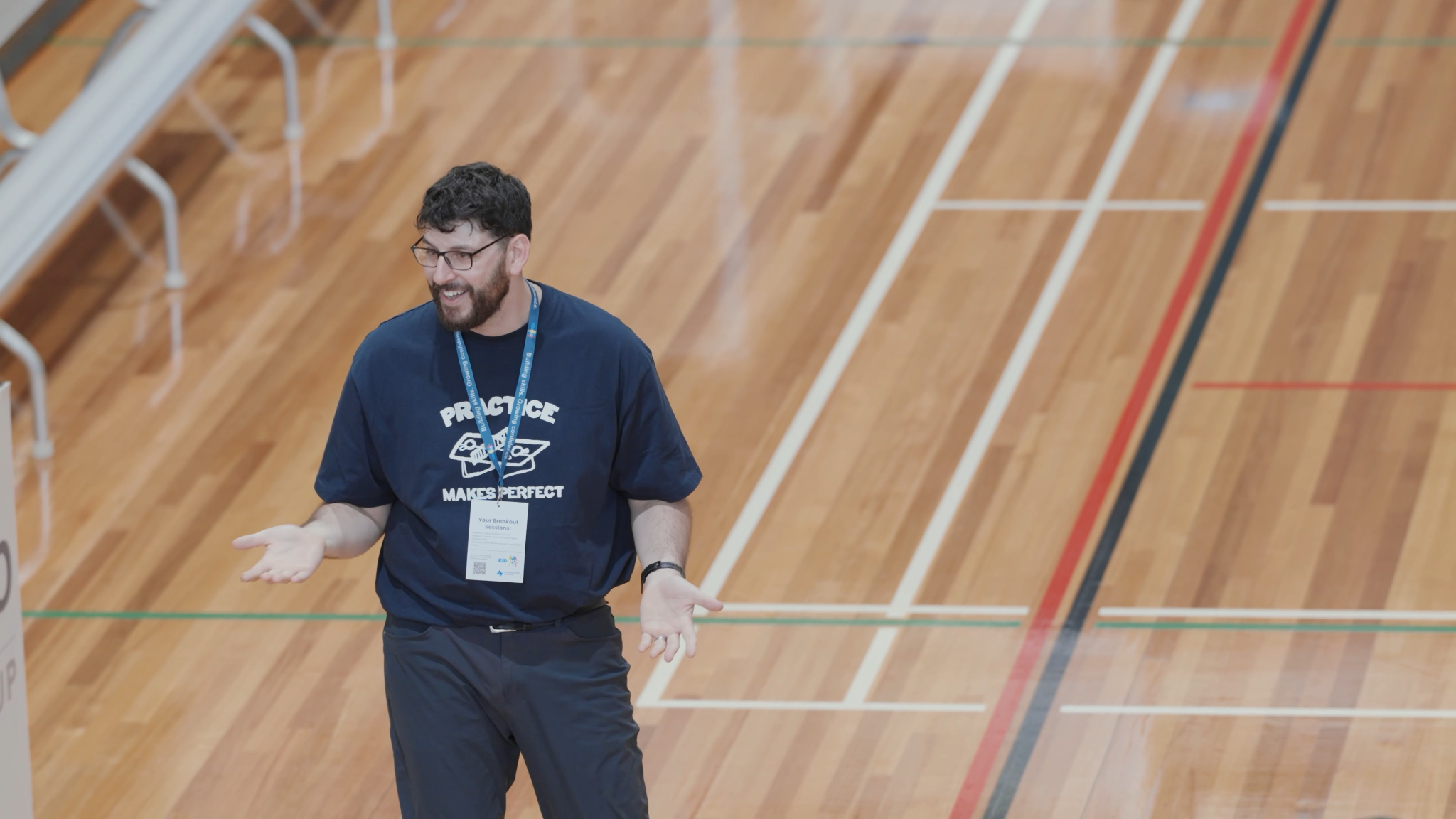
If we are not fierce in our advocacy and relentlessly optimistic in our approach, we will not achieve what we need to achieve!
There are still significant barriers preventing autistic young people from accessing physical activity.
These barriers can exist within the environment, the activity itself, the attitudes of other people or the systems designed to support participation.
We need to be willing to advocate for change.
Being relentlessly optimistic does not mean ignoring challenges or pretending that barriers do not exist. It means believing that things can improve and continuing to look for ways to make that improvement happen.
Change does not always happen quickly. But if we are not passionate about creating better opportunities for autistic young people to participate in physical activity, we will struggle to achieve the changes that are needed.
6. Be consistent

As a clinician, I make it a priority to be the same person every time. When you meet me for exercise, you know what you are going to get - because I already showed you!
This can be pivotal to building trust and making progress.
Uncertainty is challenging, so doing what you say you are going to do should be the bare minimum.
Consistency does not mean that every session needs to look exactly the same. Individualising our approach means that we need to adapt to the person and the situation.
Instead, consistency means being reliable.
It means that the participant knows what they can expect from us. We show up, we listen, we do what we say we are going to do and we provide a predictable and trustworthy relationship.
For many people, building trust takes time. Consistency helps create the foundation for that trust.
The Exercise on the Spectrum Way
These six principles form the foundation of my approach to supporting autistic young people to access physical activity:
Make it fun.
It must be evidence-based.
Individualise it.
Set a meaningful goal.
Be passionate.
Be consistent.
This is the Exercise on the Spectrum way.
If you would like to work with me, please reach out - I have current capacity for both Exercise Physiology and education bookings.
If you want to read more - you can download my book below!
